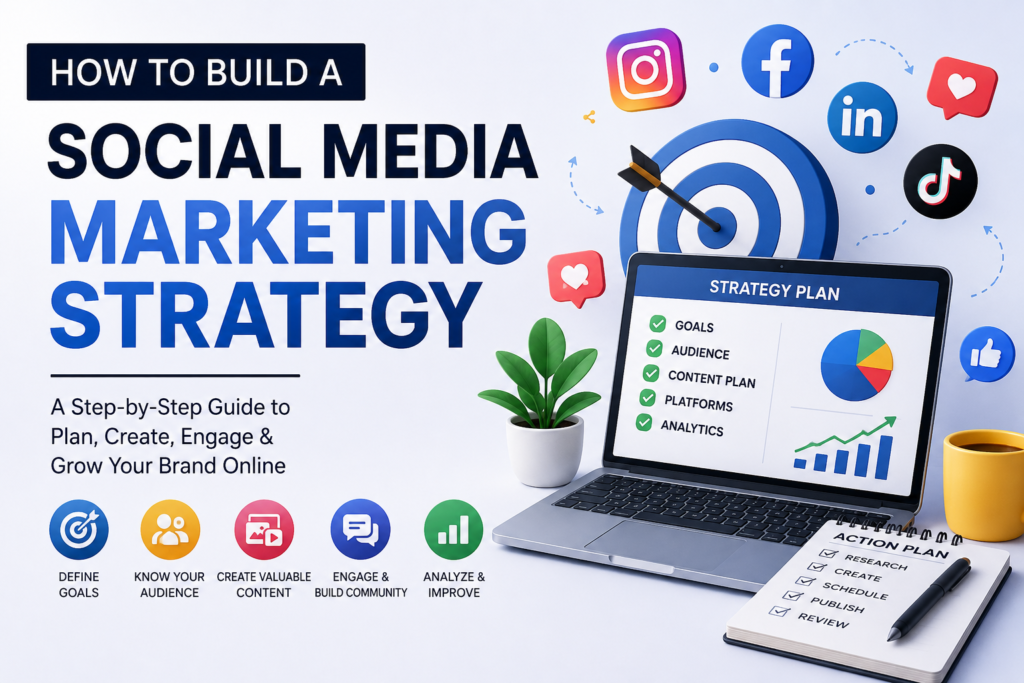
Introduction
Social media has become one of the most powerful channels for businesses to connect with their audience, build brand awareness, generate leads, and drive conversions. However, simply posting content regularly is not enough to achieve consistent results. Businesses need a clear social media marketing strategy that connects their social media activities with their overall marketing goals.
A well-planned strategy helps you understand your target audience, choose the right platforms, create valuable content, measure performance, and continuously improve your approach. Whether you are a small business, startup, creator, or established brand, having a structured social media plan can help you make better use of your time and marketing budget.
In this blog, we will explore how to build an effective social media marketing strategy and the key social media marketing techniques that can help your brand grow online.
Summary
A successful social media marketing strategy starts with clearly defined goals and a strong understanding of your target audience. From selecting the right social platforms to developing a content calendar and tracking important metrics, every step should have a specific purpose.
The most effective social media marketing techniques focus on creating useful content, maintaining consistency, engaging with followers, using platform-specific features, and analyzing performance. Instead of trying to be active everywhere, businesses should focus on platforms where their target audience is most engaged.
A strategy should also remain flexible. Social media trends, algorithms, audience preferences, and platform features continue to change. Regular analysis allows businesses to identify what works and make informed improvements.
Step-by-Step Guide
Step 1: Define Your Social Media Goals
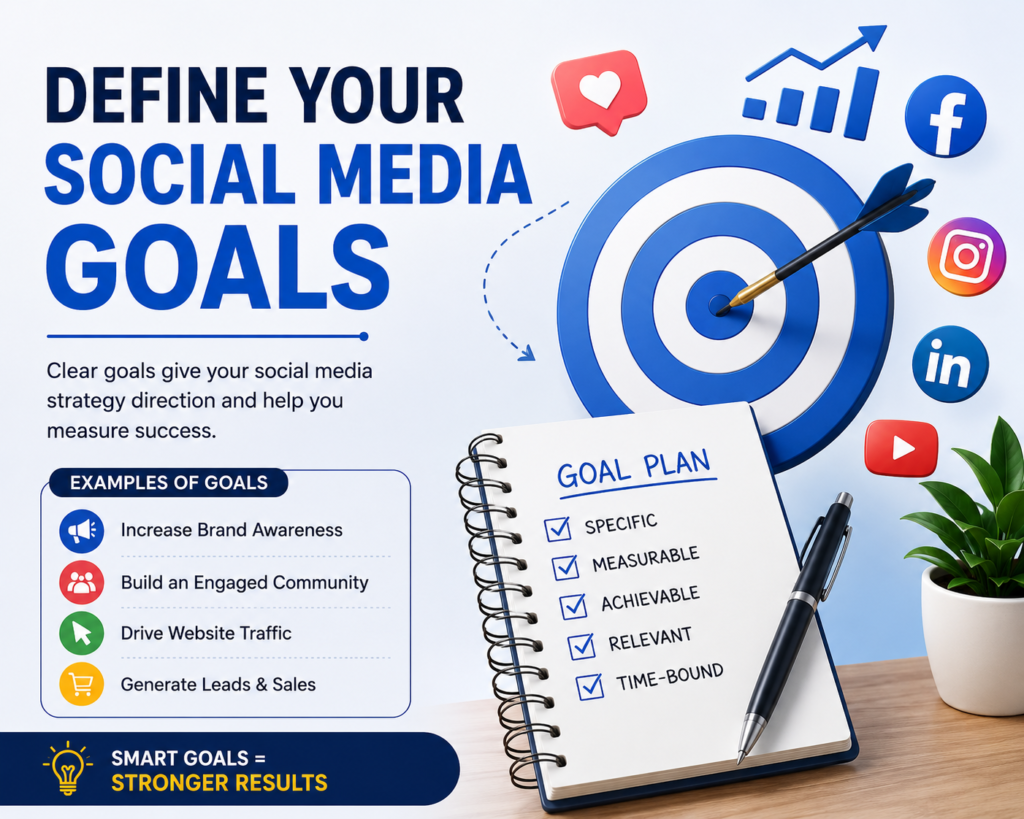
The first step in creating a social media marketing strategy is defining what you want to achieve.
Your goals should support your broader business objectives. For example, you may want to:
Increase brand awareness
Generate website traffic
Build an engaged community
Generate leads
Increase sales and conversions
Improve customer relationships
Establish authority in your industry
Try to make your goals specific and measurable. Instead of saying, “I want more followers,” set a goal such as increasing relevant followers by a specific percentage within a particular period.
Clear goals make it easier to select the right content and measure whether your strategy is delivering results.
Step 2: Understand Your Target Audience
Knowing your audience is one of the most important parts of a successful social media marketing strategy.
Research your audience’s age, location, interests, online behavior, challenges, and purchasing preferences. You should also understand what type of content they consume and which platforms they use most frequently.
For example, a brand targeting young professionals may find opportunities on Instagram and LinkedIn, while a business focused on visual products may benefit significantly from platforms built around visual discovery.
The better you understand your audience, the easier it becomes to create content that feels relevant rather than promotional.
Step 3: Choose the Right Social Media Platforms
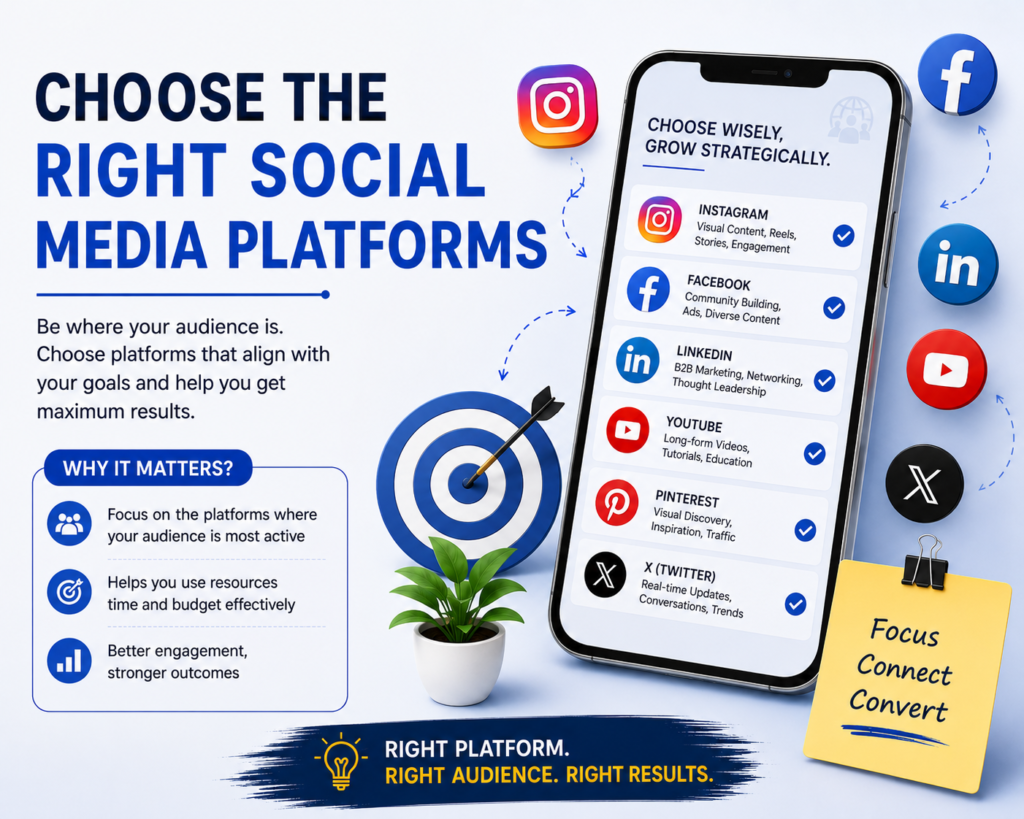
You do not need to be active on every social media platform.
One of the most useful social media marketing techniques is to select platforms based on your audience and business objectives.
Consider platforms such as:
Instagram: Useful for visual content, reels, stories, and community building.
Facebook: Suitable for communities, local businesses, advertising, and diverse content formats.
LinkedIn: Effective for B2B marketing, professional branding, and thought leadership.
YouTube: Strong for educational, entertaining, and long-form video content.
Pinterest: Useful for visual discovery and content that can generate long-term traffic.
X: Can support real-time conversations, industry discussions, and brand communication.
Instead of spreading your resources across multiple platforms, focus on two or three channels where your audience is most active.
Step 4: Create a Strong Content Strategy
Content is the foundation of your social media marketing strategy. Your content should provide value while supporting your business goals.
A balanced content strategy can include:
Educational content: Share tips, tutorials, guides, statistics, and industry insights.
Entertaining content: Use relatable posts, short videos, stories, and creative formats to capture attention.
Inspirational content: Share success stories, customer experiences, and motivational ideas.
Promotional content: Highlight products, services, offers, events, or important announcements.
Avoid making every post a sales pitch. A strong social presence should educate, engage, and build trust before asking the audience to make a purchase.
Step 5: Develop a Content Calendar
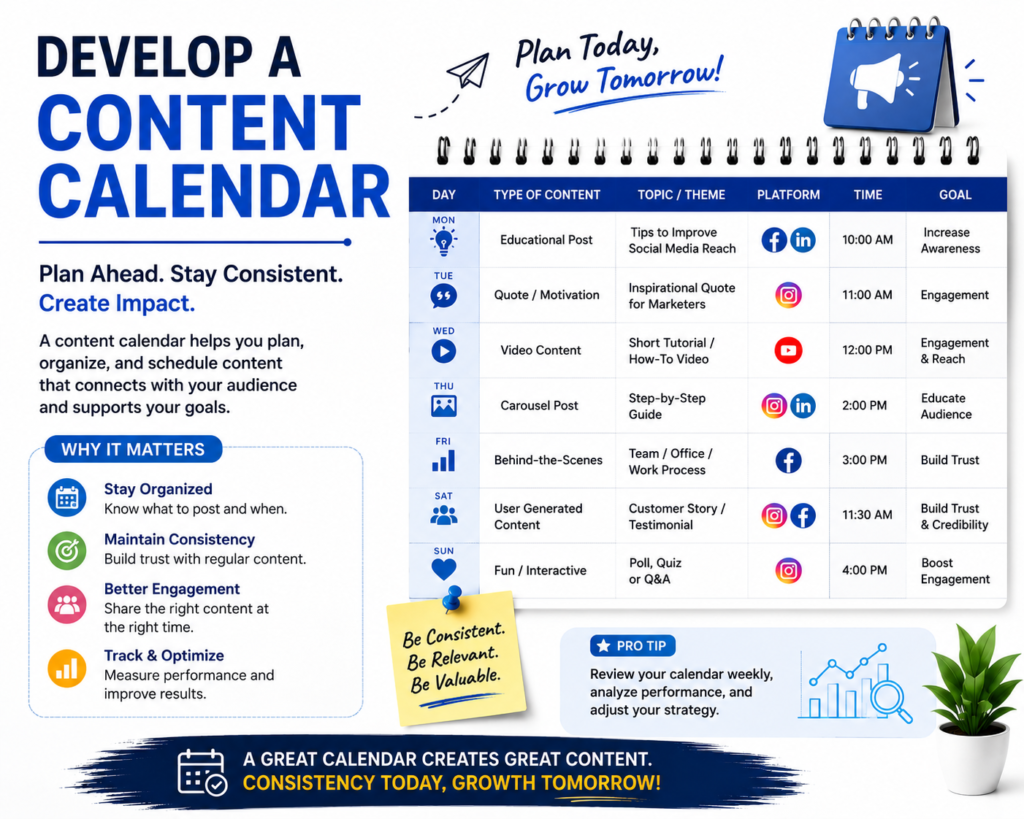
Consistency is essential for social media growth. A content calendar helps you organize your posts and maintain a regular publishing schedule.
Your calendar can include:
Publishing date
Platform
Content topic
Content format
Caption
Keywords or hashtags
Call to action
Creative requirements
Planning content in advance also allows you to connect posts with festivals, events, product launches, industry trends, and important business milestones.
A calendar does not mean every post has to be planned weeks in advance. Leave room for timely and trending content when it makes sense for your brand.
Step 6: Use the Right Social Media Marketing Techniques
Once your content plan is ready, focus on techniques that improve reach and engagement.
Some effective social media marketing techniques include:
Use short-form video: Reels, Shorts, and similar formats can help brands communicate ideas quickly and attract attention.
Encourage engagement: Ask questions, conduct polls, invite opinions, and respond to comments.
Use strong hooks: The first few seconds or first line of your content should give users a reason to continue watching or reading.
Repurpose content: Turn a blog into a carousel, video, infographic, or series of social posts.
Use user-generated content: Customer reviews, testimonials, and community content can strengthen credibility.
Collaborate with creators: Relevant creators and influencers can help brands reach new audiences.
Optimize your profiles: Use clear descriptions, relevant keywords, recognizable branding, and a strong call to action.
These techniques become more effective when they are consistently tested and measured.
Step 7: Engage With Your Audience
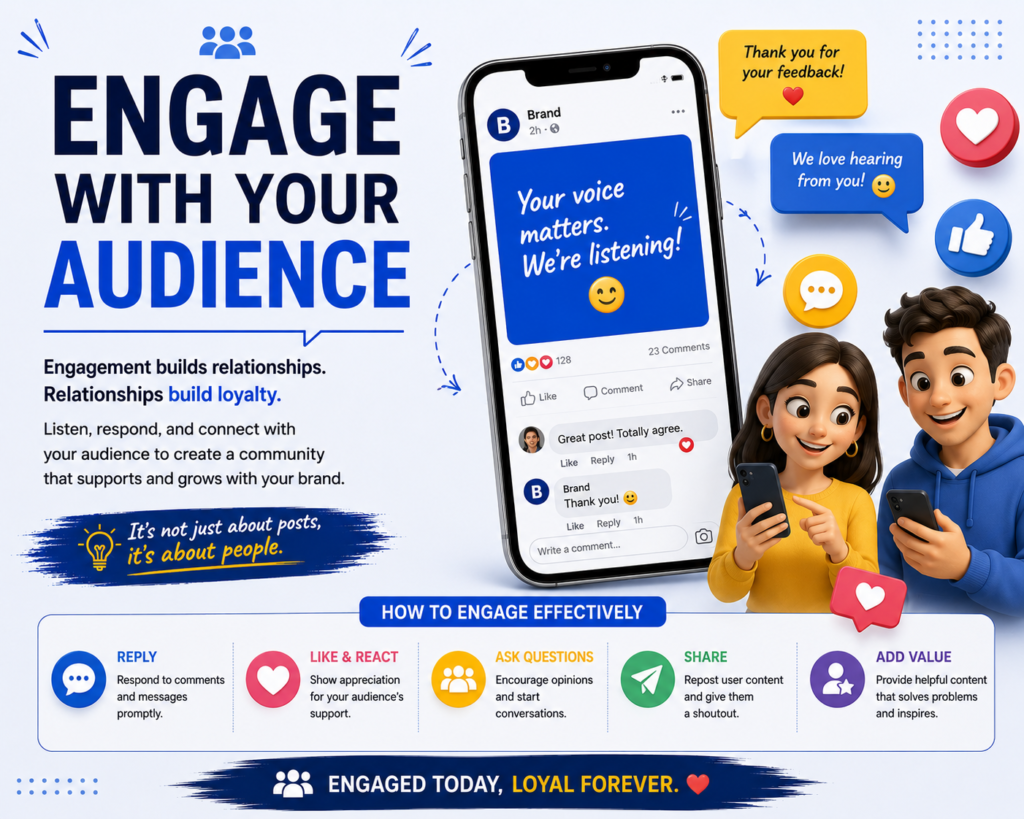
Social media is not only about publishing content. It is also about building relationships.
Respond to comments and messages, acknowledge customer feedback, participate in relevant conversations, and encourage your audience to share their experiences.
Active engagement can make a brand feel more approachable and can help turn followers into a loyal community.
Remember that negative feedback should also be handled professionally. Responding thoughtfully can demonstrate that your business values its customers.
Step 8: Track and Measure Performance
A social media marketing strategy should always be supported by data.
Important metrics may include:
Reach
Impressions
Engagement rate
Follower growth
Website traffic
Leads
Click-through rate
Conversions
Cost per result
Do not focus only on follower count. A smaller but highly engaged audience can be more valuable than a large audience that rarely interacts with your content.
Review your performance regularly to identify your strongest platforms, content formats, topics, and posting patterns.
Step 9: Test, Analyze, and Improve
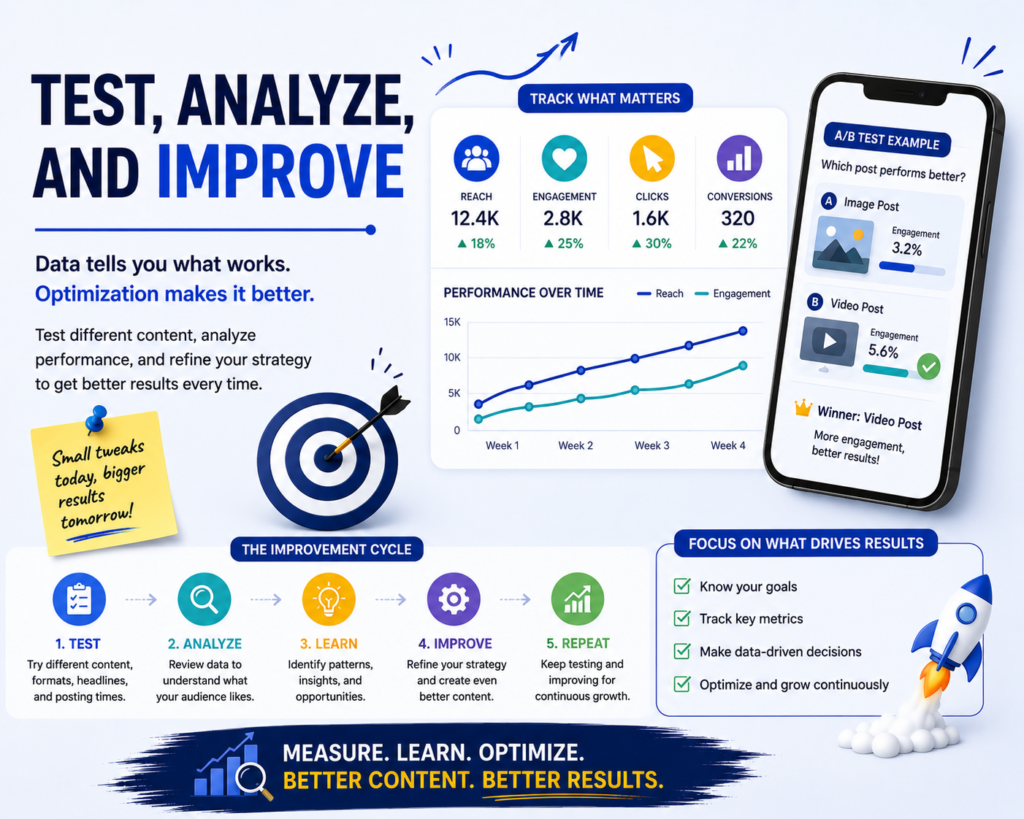
Social media marketing is an ongoing process. What works today may not produce the same results tomorrow.
Experiment with different content formats, hooks, captions, posting schedules, and calls to action. Compare the results and use the insights to refine your social media marketing strategy.
For example, if educational videos consistently receive more saves and shares than promotional posts, you can increase the amount of educational content in your content mix.
The goal is not to create a perfect strategy from day one. The goal is to continuously learn and improve.
Conclusion
Building an effective social media marketing strategy requires more than posting content regularly. It involves setting clear goals, understanding your audience, selecting the right platforms, creating valuable content, engaging with your community, and measuring performance.
The right social media marketing techniques can help businesses improve visibility, strengthen relationships, generate leads, and build long-term brand value. Most importantly, your strategy should remain flexible enough to adapt to changing audience behavior and social media trends.
With consistent execution, meaningful content, and regular performance analysis, social media can become a powerful part of your overall digital marketing strategy.